



10 Best Online Community Platforms in 2026
This article outlines the best online community platforms in 2026. We will discuss everything from the most popular free community-building software to highly advanced paid services.

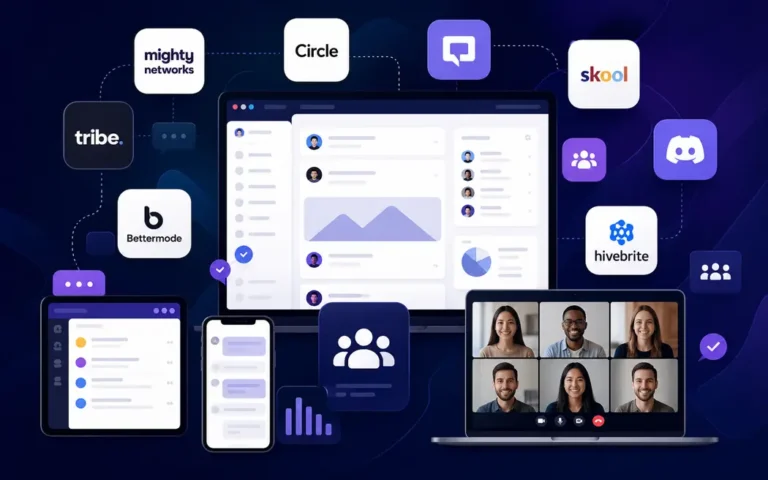
best online community platforms
Choosing the Right Community Platform in 2026
There are many tools claiming to be the best online community platforms, but the truth is that there are a lot of complications. Many tools are designed specifically for engagement, many tools are built to help with monetization, and a small number of tools attempt to do both but then limit their potential. Because of this, selecting a tool is not a one-dimensional decision. It is also strategic.
Best Online Community Platforms in 2026
If you just need a fast recommendation without reading the full guide, here are the top 5 best online community platforms in 2026, based on use cases:
- Mighty Networks – The ultimate place for hosting your membership, course, and structured community sites.
- Circle – A modern community space with great design and user engagement.
- Discord – The best way to set up a community fast and easily communicate in many ways for free.
- Skool – Great if you are creating a coaching community with gamification and simplicity in mind.
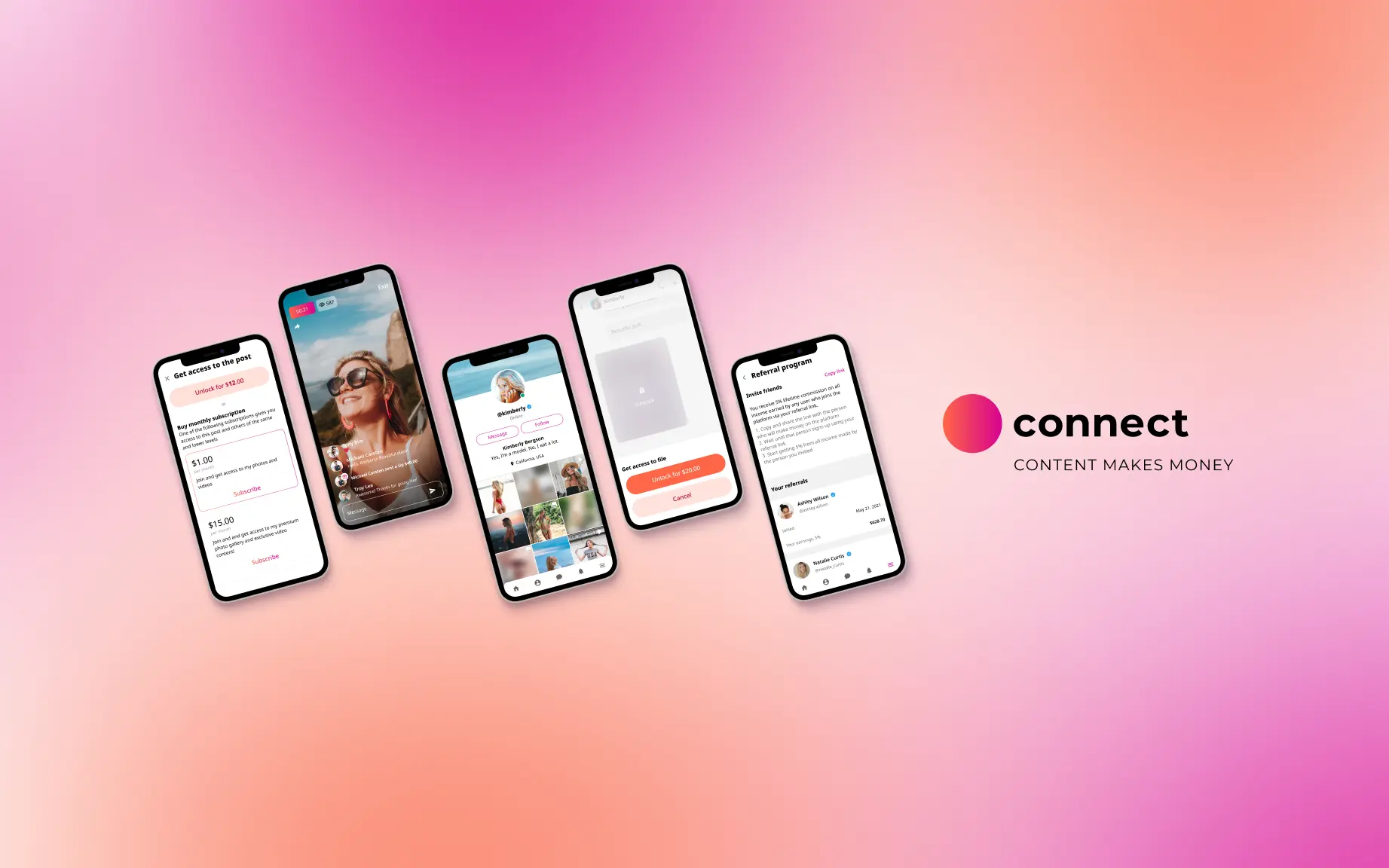
- Scrile Connect— One of the best places for full ownership, custom branding, and creative monetization options to grow your business.
Quick Comparison Table
| Platform | Best for | Pricing model | Monetization | Ownership |
| Mighty Networks | Creator ecosystems | Paid | Strong | Platform-based |
| Circle | Modern communities | Paid | Strong | Platform-based |
| Discord | Free communities / testing | Free | Limited | No ownership |
| Skool | Coaching & courses | Paid | Strong | Platform-based |
| Scrile Connect | Custom business platforms | Custom | Unlimited | Full ownership |
Why Community Platforms Matter More Than Ever

There has been a significant change in how businesses are built online. Once, you could have followers and be good enough for growth. Now, it is not that simple. Algorithms change frequently, and the reach of your posts is always changing. And there is a huge cost to getting someone’s attention.
Now social community platforms are becoming essential to creators and businesses because they provide something that traditional social media platforms will not: control of the relationship between the creator and the audience. So, instead of going after engagement on outside platforms, you create your community on the platform that you choose. This gives members the opportunity to join, stay, and engage on your terms. That changes everything.
A third major shift is the way you can monetize your community. The majority of the more successful community platforms are now providing more than just a method of communicating. They now provide a format for creating reoccurring revenue through subscriptions, premium content, paid events, and courses. That way, your community becomes a place to do business rather than just a tool for engaging.
“Branded customer communities aid clients in adopting solutions and services, accessing support, and networking with peers via a digital experience.” — Gartner, Market Guide for B2B Customer Community Platforms
Why Free Tools Are Often Just a Starting Point
Many users begin with the best free community platforms because they look simple and low-risk. And that’s fine for testing ideas. But there’s a catch. The majority of free tools include aspects such as limited analytical, customization, and monetizing opportunities that hinder your growth over a period of time.
In the same way, free online community platforms offer great initial validation to a user but don’t typically allow the user to create any type of long-term scaled platform or business without limitation.
10 Best Online Community Platforms in 2026 (Full Breakdown)
1. Mighty Networks
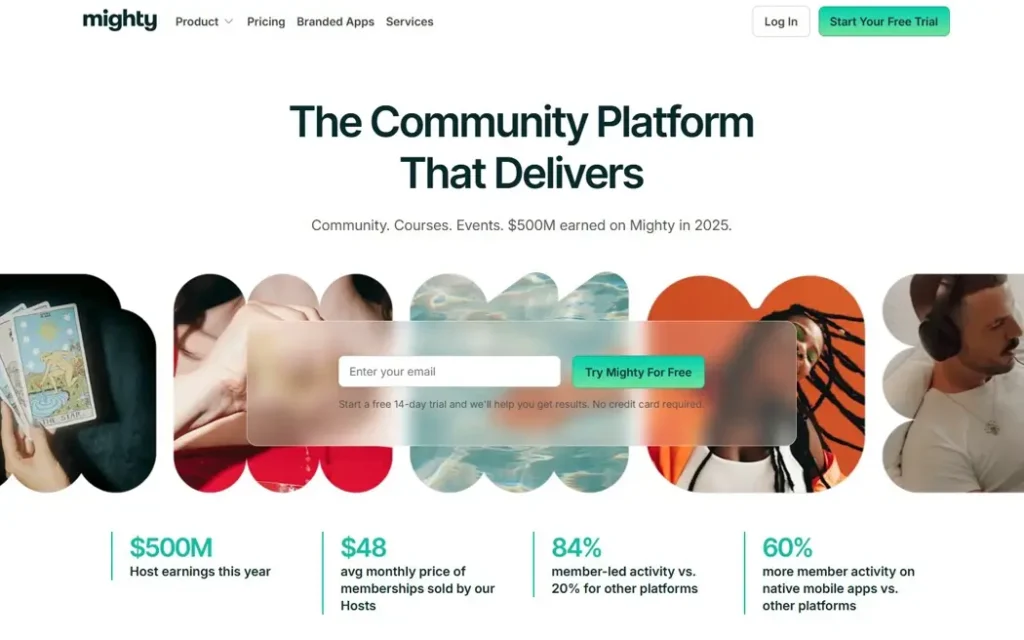
This is an extremely popular platform within the industry. It combines courses, memberships, and community features in one ecosystem. This works especially well for creators developing a structured program but may feel limited in terms of customization if you want complete control over your brand or user experience.
2. Circle
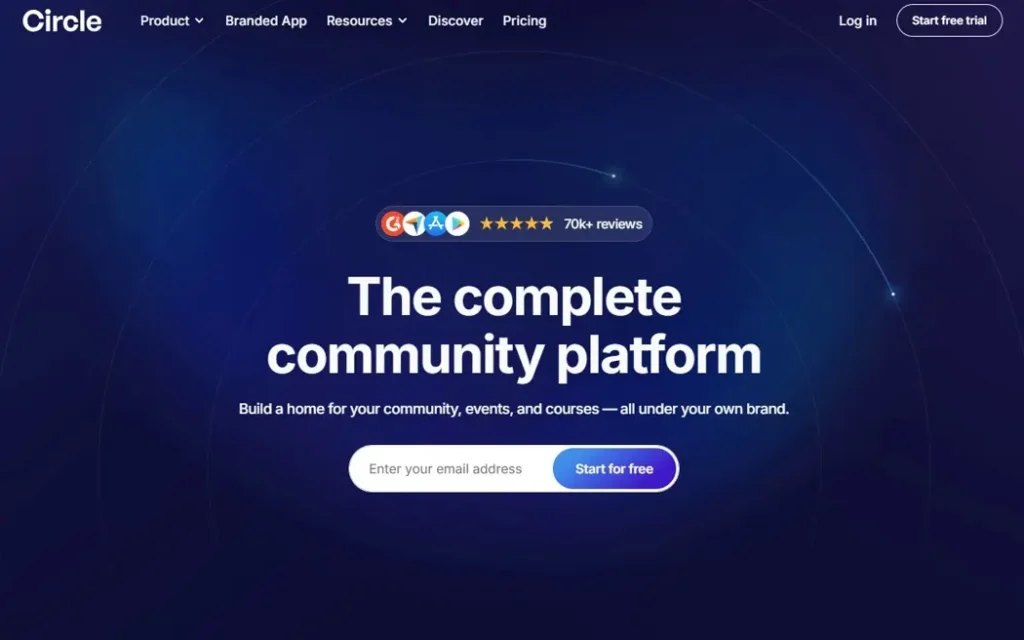
It is designed for minimalism, and this allows for a smoother experience when using it. Entrepreneurs and startups have found Circle attractive because they want to be on a modern platform that also has an easy-to-use interface. Circle has features to help manage your membership, discussion space, and content areas. Some of the advanced features available for monetizing will require integration with other systems to be fully utilized.
3. Discord
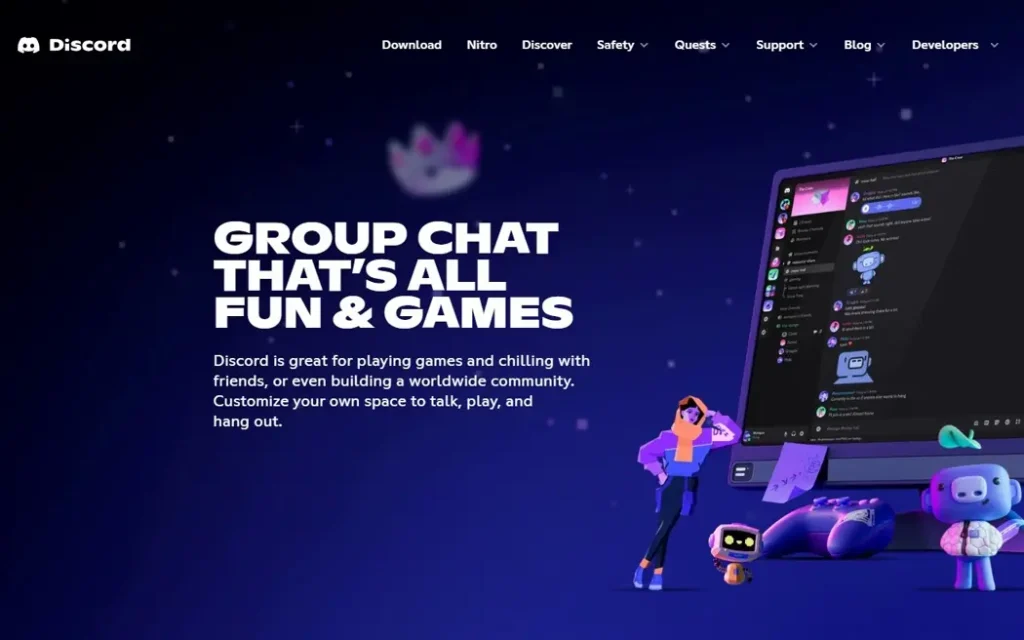
Originally built specifically for gamers, Discord has transitioned to be one of the most well-known free online community platforms in the world today. It’s an incredibly powerful, highly flexible platform, and best of all? It’s completely free to use. The downside is that monetization isn’t built into the platform, and you’ll need to incorporate different tools to be able to monetize on Discord.
4. Skool
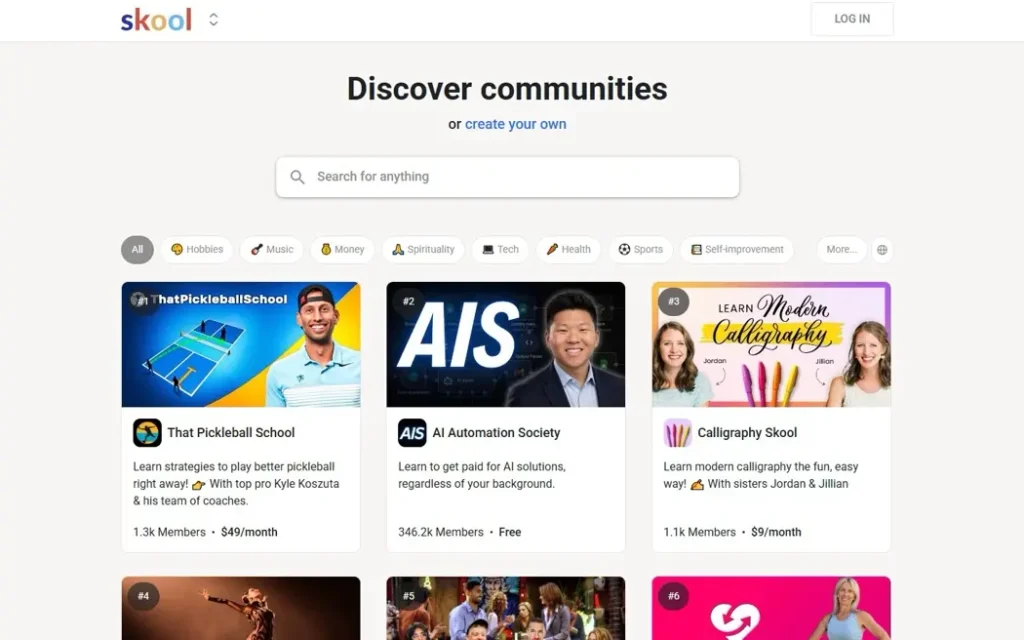
It combines community and course delivery in a single easy-to-use interface. The platform also leverages gamification to boost user engagement, which is perfect for building coaching communities. However, it is less flexible when it comes to complex business models.
5. Kajabi
It is the ideal solution for anyone looking to run an entire company on the internet. Not only does it offer everything you need for creating and delivering your own online courses, but Kajabi also provides robust email marketing automation, funnels, and even community-style functionality. While the overall cost of utilizing Kajabi can be quite expensive and potentially unaffordable for some new entrepreneurs, if you are serious about growing your business long-term, there’s no doubt that Kajabi could be a great choice for you.
6. Geneva
This platform is a new player in the free community platform market. It specializes in group communication and small communities. The platform is a very simple, lightweight, and mobile-friendly app. However, it does not provide advanced monetization options.
7. Slack Communities
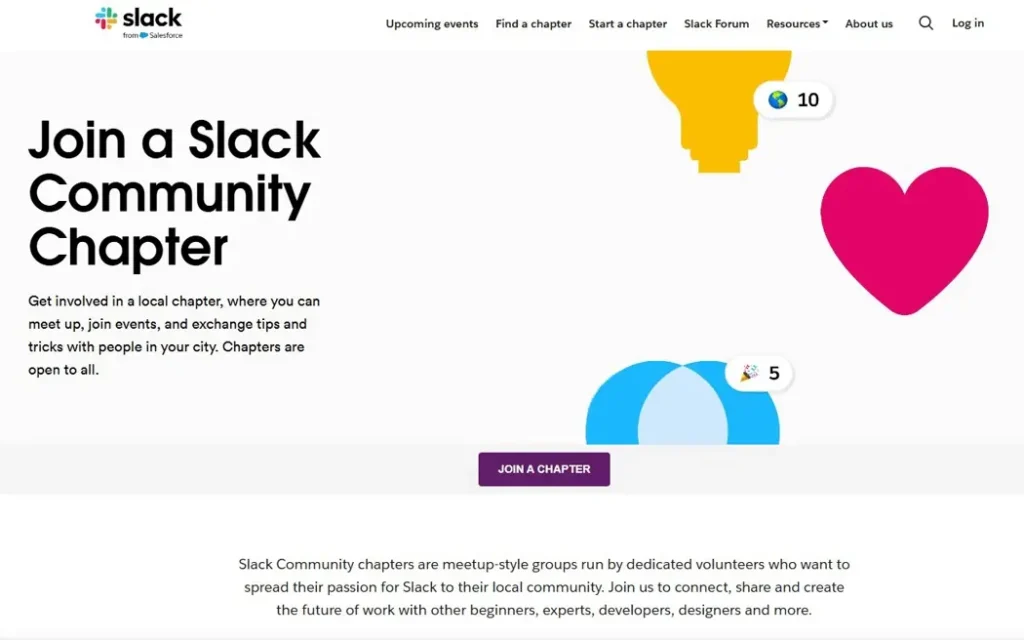
This platform is well known for being used by both businesses and niche communities. It is very good at managing structured discussions but was not designed to be a complete community platform app for public audiences or for the purpose of monetization.
8. Facebook Groups

Still one of the largest social community platforms in the world. It offers reach and familiarity, but you don’t own your audience, and algorithm changes can heavily impact visibility.
9. Bettermode
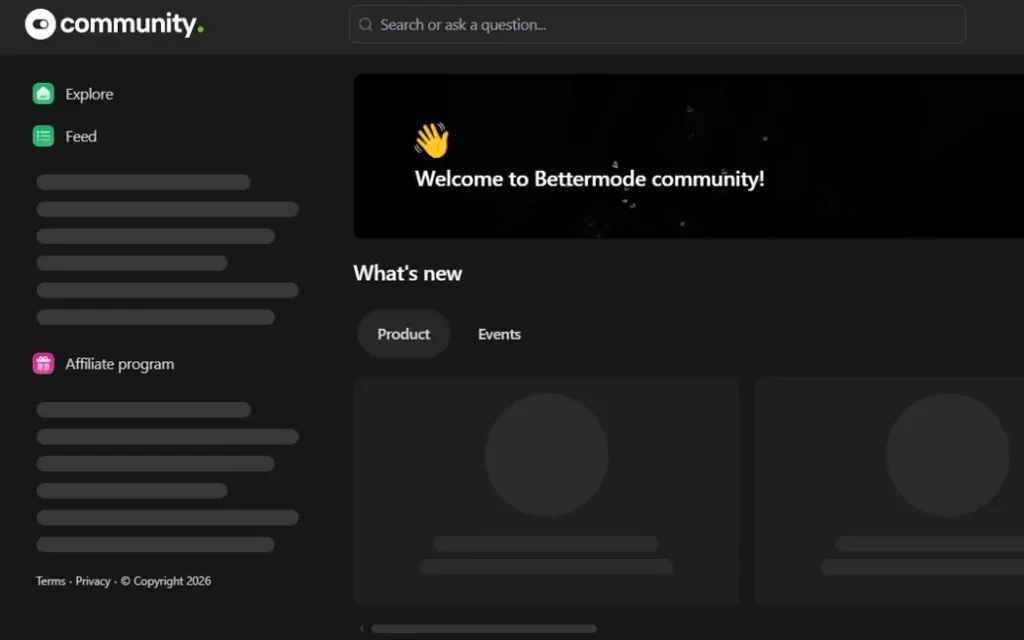
Bettermode is strong for SaaS companies building customer community platforms. It focuses on support, feedback, and engagement. It’s more business-oriented than creator-focused.
10. Custom Platform

Custom solutions allow for more complete control, whereas SaaS tools do not. With custom solutions, you can customize your community to have complete control and create a branded experience. You can also have flexible monetization options for your app and scale up or down depending on your needs. This is a fundamentally different way of building communities.
Community Platforms Examples and Real Use Cases

First off, having an understanding of what the tool is provides insight into how that tool may perform in different examples of use. Looking at examples directly can help make that picture clearer. The majority of successful community platforms use a hybrid of engagement and content as well as monetization to create a well-developed structure for their communities.
Creator-Led Paid Communities
Subscription models of creation are going to be the most prevalent in 2026. Subscription models generally have a two-part system. You have the platform (like Circle, Mighty Networks, etc.) where the creator provides the exclusive content, discussion boards, and live events. But your members also pay a monthly fee for those features. This has been a proven success for creators because it provides continuous revenue from the membership as opposed to a one-time purchase.
Coaching and Course Communities
Coaches like to use accountability groups to encourage learning, and they are often associated with a training program. For example, a fitness coach may charge $29 per month and provide customers with access to workout plans, weekly phone calls, and opportunities to see one another. This approach is found throughout the leading community platforms because it provides more successful retention. The better the engagement loop, the higher the likelihood customers will remain engaged for an extended period.

SaaS Customer Communities
SaaS companies use customer community platforms like Bettermode or Slack to reduce churn. Instead of relying only on support tickets, they build spaces where users help each other, share use cases, and give feedback. This will give an opportunity to reduce the support cost and grow the product through use over a period of time.
Free Community Launches
Many founders start with the best free community platforms like Discord or Geneva to test demand prior to making investment decisions for their paid infrastructure. This is an excellent strategy for startup companies, where demand is uncertain during the early phases of their business. However, once you are monetizing your business, you will soon realize the limitations of non-paid community platforms.
Mini Calculation: What a Small Community Can Generate

Let’s say you have a community with:
- 150 members.
- $20 per month subscription.
= $3,000 per month in recurring revenue.
Subtract platform costs:
- SaaS platform fees ~ $100 – $300 a month.
- Payment processing fees (roughly 3 – 5%) will equal approximately $90 – $150.
= net revenue = $2,550 – $2,800 a month.
Now take this community and scale up to 500 members. So, now we are already talking about some real income, and this is why platform choice is so important.
“A strong customer community works as retention infrastructure: it makes value visible, support scalable, and trust social.” — CX Today, B2B Customer Community Retention Report (2026)
Comparison Table: Top Community Platforms in 2026
| Platform | Pricing level | Monetization tools | Customization | Ownership | Best use case |
| Mighty Networks | Mid–high | Strong | Medium | Platform-based | Creator ecosystems |
| Circle | Mid | Strong | Medium | Platform-based | Modern communities |
| Discord | Free | Limited | Low | No | Early-stage communities |
| Skool | Mid | Strong | Low | Platform-based | Coaching groups |
| Kajabi | High | Very strong | Medium | Platform-based | Courses + funnels |
| Geneva | Free | Weak | Low | No | Small groups |
| Slack | Freemium | None | Low | No | Professional teams |
| Facebook Groups | Free | Weak | None | No | Broad audience reach |
| Bettermode | Mid | Medium | High | Platform-based | SaaS customer hubs |
| Scrile Connect | Custom | Unlimited | Full | Full | Scalable businesses |
What This Table Really Shows
When you dig into the details, there is a clear trend emerging. Although using free tools such as Discord or Facebook Groups is good for just starting with a group, these platforms make it difficult for you to control the group. On the other hand, introducing a SaaS like Circle or Mighty Network offers an ideal mix of ease of use and money-making potential while still keeping you in their ecosystem.
Custom-built solutions fall into another category all together. They remove restrictions but require you to put in more time to develop your custom-built solutions through strategic thinking on how they will fit into your overall growth in the future.
Scrile Connect: Build Your Own Community Platform
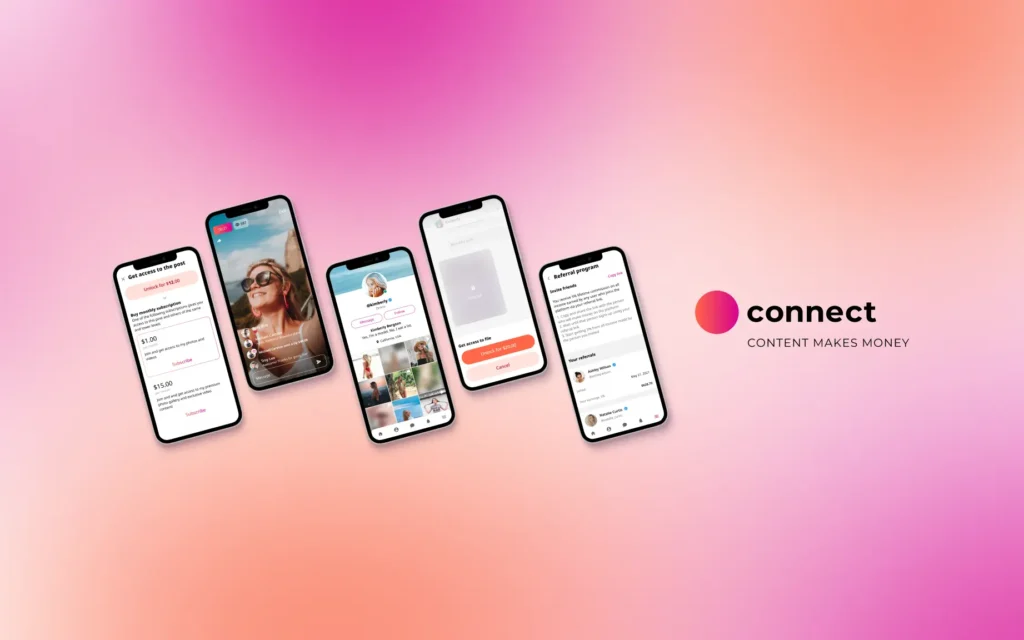
At some point, many creators and businesses reach the same conclusion: renting a platform is fine, but owning your infrastructure is better. That’s where Scrile Connect comes in.
It is a community platform app built for businesses that want full control over branding, monetization, and user experience.
What You Can Build With Scrile Connect
- Added cost of membership or subscription.
- Private closed-off communities and gated content.
- Courses, events, and other forms of digital products.
- A fully branded experience
It is designed for serious creators, agencies, and businesses that want to scale without platform dependency. If you are ready to move beyond limitations and build a community you fully control, Scrile Connect is worth exploring.
FAQ: Best Online Community Platforms in 2026
What is the best platform to build a community from scratch?
Your choice of a platform also depends upon the monetization model you plan to implement. Choosing a platform that allows you to sell memberships, courses, or premium content from the beginning of your project will allow you to offer those products on your platform as soon as possible.
Otherwise, you will likely find yourself needing to move your community later on since many platforms require tools to transfer affected users from one system to another. This will slow down growth and make it difficult to keep users.
Where can I join online communities in 2026?
Today, diverse platforms have created entirely new feelings within community spaces. Some platforms encourage real-time interaction and media sharing, providing a more personal feel and moving away from the traditional “forum” style of discussion.
While the location to which you’re joining is some of the differentiation, one of the biggest differentiators today has been the amount of involvement in the environment. Some platforms use discussion threads as their primary method of interaction, while others rely on 1:1 engagement and/or content sharing.
Are free online community platforms enough to grow a business?
So, while these platforms can work well for validating your audience, they may not continue to work well once you start scaling to a non-virtual or real-world business model.
As soon as your online community has developed into more of a business asset, you will most likely require a more structured, or paid, platform to continue to meet your increasing needs.
What is a social community platform?
The types of community platforms include Facebook Groups, Discord servers, and modern creator communities based on platforms such as Circle and Mighty Networks.
The two primary differences between these platforms are the amount of control a user has and whether or not members can generate income through them.
How do customer community platforms help businesses?
Companies can build an online community, which will enable users to do the following:
• Have direct conversations with each other.
• Provide feedback on company products.
• Help each other by answering questions.
• Review and consider various ways to use products.
As companies become less reliant on traditional means of providing support, the cost of providing support will decrease while improving customer loyalty because they are able to build a sense of community around their product applications.
What is the difference between Circle and other community platforms?
Other platforms typically do not provide their members with a complete mix of usability and functionality. Circle has the ability to support membership sites, discussions, and content areas to create an excellent solution for today’s content creator.
As with any other SaaS platform, Circle operates on a defined set of rules. Therefore, any customizability or long-term viability of Circle will be a factor of Circle’s development roadmap and limitations.

